What Actually Happens When a Technician Comes Out for Maintenance
A twenty-minute glance and a real maintenance visit look nothing alike once you know what to watch for.
August 25, 2026 · 4 min read
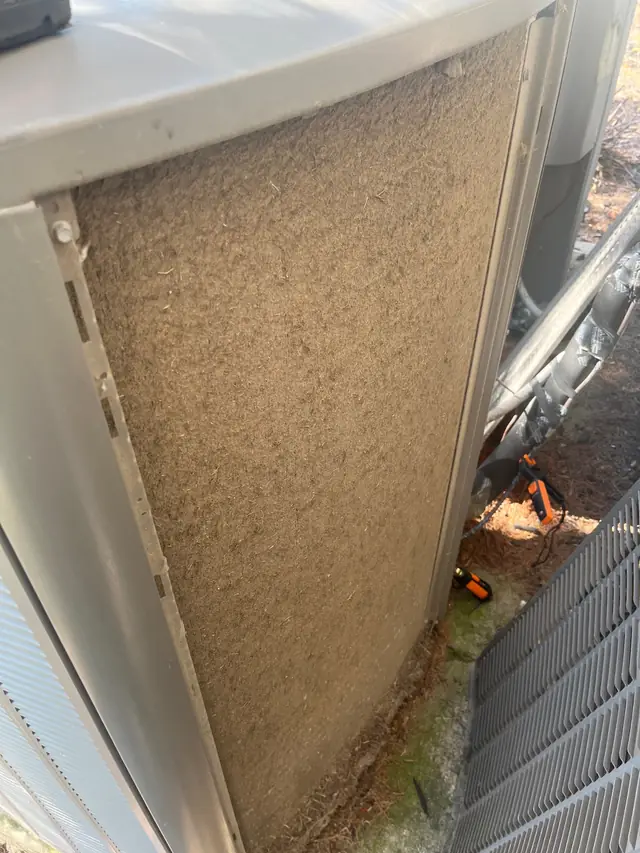
If you've never really watched what a technician does during a maintenance visit, it's easy to assume it's mostly a formality. Someone shows up, looks at the outdoor unit for a few minutes, maybe changes a filter, and leaves. A real maintenance visit is a lot more specific than that, and in a climate where a system runs nearly year-round, the difference between a real check and a rushed one shows up in your electric bill and your repair calls a lot faster than people expect.
The outdoor unit gets more attention than people realize
The condenser coil, the outdoor part of the system that releases heat, collects dust, pollen, grass clippings, and cottonwood fluff over a season, and a matted coil makes the whole system work harder to do the same job. A technician should be checking the coil for buildup and cleaning it when needed, since a heavily clogged coil raises the pressure the compressor has to work against, which drives up both energy use and long-term wear. They're also checking refrigerant levels, since a system running low, usually from a slow leak somewhere in the line, will cool poorly and can damage the compressor over time if it's left unaddressed.
Inside the house, it's mostly about airflow and safety
- Checking the blower motor and wheel for dust buildup that restricts airflow
- Testing electrical connections and capacitors, since a weak capacitor is one of the more common causes of a no-cool call in peak summer
- Checking the condensate drain line for clogs, which cause water damage if they back up
- Inspecting the filter and confirming it's the right size and rating for the system
- Verifying thermostat calibration and operation, especially on smart or programmable models
A capacitor check is worth calling out specifically, because a capacitor that's starting to weaken doesn't usually fail gradually in a way you'd notice day to day. It works fine until the afternoon it doesn't, almost always during the hottest stretch of summer when the compressor is working its hardest. Catching a weak capacitor during a routine visit, before it fails outright, is one of the more useful things a maintenance check can do, and it's a cheap part to replace on a scheduled visit compared to an emergency call on a Saturday in August.
It's easy to assume a system that's cooling fine right now doesn't need attention, and most of the time that's true right up until the week it isn't. The parts that fail on a maintenance visit almost never fail because someone skipped one check. They fail because small things, a slightly weak capacitor, a coil that's ten percent more matted than it was last year, a refrigerant charge that's crept a little low, stack up quietly over a couple of seasons until they cross a line all at once.
Why twice a year, not once
A system in this part of Texas runs cooling for most of the year and still gets real use out of the heating side during the handful of genuinely cold weeks each winter. Checking it once, before summer, catches the cooling side. Checking it again before the cold snaps hit catches the heating side and the parts that only get exercised a few weeks a year, which are exactly the parts most likely to have quietly failed without anyone noticing.
What a good report back should include
After a visit, you should walk away knowing more than "everything looks fine." A technician who's actually done the work can tell you the refrigerant pressure readings, the condition of the coil, and whether anything is trending toward a problem, even if it isn't one yet. That's the difference between maintenance that's actually catching things early and maintenance that's just a scheduled visit for its own sake.
Blue Label Services runs its Blue Diamond Club membership around this exact structure, with tiers from a single year of two visits up to five years of ten visits, each including a guaranteed 24-hour response window, a set dispatch fee seven days a week, and 15 percent off upfront repairs. Reviewers have specifically named technicians Scott and Nick for exactly this kind of thorough, walk-you-through-it visit, including one customer who noted Scott showed up earlier than scheduled and explained the diagnosis clearly before starting work.
A visit is also a reasonable time to ask questions. How old is the system. What's its expected remaining life. Is the ductwork sized right for the equipment. A technician who's actually spent time in the attic and at the outdoor unit that day is in a much better position to answer those honestly than someone quoting a replacement over the phone without having seen the system at all.
Blue Label Services, (832) 429-2209
Call (832) 429-2209More articles
Why the Upstairs Never Cools Off in a Two-Story Cypress Home
Heat rises, but that's only half of why the second floor runs hotter than the first all summer long.
What Attic Insulation Actually Has to Do With Your AC Bill
The AC and the attic are working on the same problem whether anyone treats them that way or not.