Why the Upstairs Never Cools Off in a Two-Story Cypress Home
Heat rises, but that's only half of why the second floor runs hotter than the first all summer long.
August 25, 2026 · 4 min read
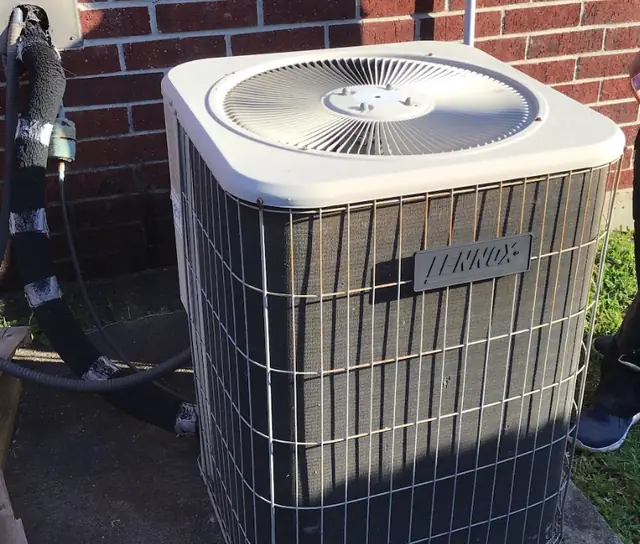
You set the thermostat to 72. Downstairs, in the kitchen where the return vent is, it actually gets there. Upstairs, in the room over the garage, it's 79 by four in the afternoon and it stays that way until well after dinner. If that sounds familiar, you're not imagining it and you're not alone. Almost every two-story home in Cypress runs this way to some degree. The question worth asking isn't whether the gap exists. It's which parts of it are normal, and which parts are a system that isn't doing its job.
Heat rises, but that's the small part of the story
Yes, warm air rises and cool air sinks, so a second floor is always going to work a little harder than the first. But that effect alone shouldn't cost you seven degrees. The bigger driver in this climate is the attic sitting directly above that upstairs ceiling. On a July afternoon, an attic in Cypress can climb past 130 degrees. That heat doesn't stay up there. It radiates straight down through the ceiling drywall into every room below it, all day, every day, from May through September. Your AC has to fight the outdoor temperature and that second heat source at the same time, and the second one sits a few feet above your kids' bedrooms.
The single-return setup makes it worse
A lot of homes built in this area run one central return, usually downstairs, feeding a single system that's supposed to cool the whole house evenly. It rarely does. The thermostat reads the air near the return, so the system shuts off once the downstairs hits its target, even while the upstairs is still climbing. If your ductwork upstairs is also running long, twisting runs with a few too many bends, the air that does make it up there arrives weaker than it left the unit. Add a two-story great room stealing volume from the system, and the upstairs was fighting an uphill battle before the sun even came up.
There's also a simple math problem at work. A two-story home has roughly the same footprint of ductwork trying to serve twice the vertical distance, and hot air naturally wants to pool at the top of that stack whether the system is running or not. Even a perfectly balanced system has to work against that tendency all day long. None of this means a hot upstairs is unfixable. It means the fix usually isn't one thing, it's whichever combination of the items below is actually causing the biggest share of the gap in your specific house.
What's actually fixable, roughly in order
- Attic insulation depth and coverage, since that's the heat load hitting the ceiling directly below it
- Return air balance, so the system isn't shutting off based only on how the downstairs feels
- Duct runs that are undersized, kinked, or leaking conditioned air into the attic before it reaches the vent
- Supply register placement and whether upstairs rooms actually have one sized for the space
- Zoning dampers, which let one system serve two floors at two different setpoints instead of one average
Notice that a bigger AC unit isn't on that list. Oversizing a system to "push harder" on the upstairs almost always backfires. A bigger unit cools the air near the thermostat faster, shuts off sooner, and never runs long enough to pull the humidity out of the house or push air the full distance up the duct run. You end up with a downstairs that's cold and clammy and an upstairs that's still warm. Right-sizing and correcting the airflow path beats raw capacity almost every time.
Where to start if you're dealing with this now
If your attic hasn't had insulation added since the house was built, that's usually the highest-value place to look first, because it's addressing the heat before it ever reaches your ductwork or your ceiling. From there, a technician can check static pressure and airflow at the upstairs registers to see whether the ducts themselves are the bottleneck. Sometimes it's a five-minute damper adjustment. Sometimes it's a conversation about zoning. Either way, you want someone measuring the actual airflow, not guessing from a thermostat reading downstairs.
Blue Label Services has been doing this work in Cypress since Bill Fortner started the company in 2019, after 27 years in the trade, and it's still a family operation today with his two sons and his daughter. Because the crew handles both HVAC and attic insulation directly, rather than subcontracting one or the other out, they can look at a hot upstairs bedroom as one problem instead of two separate service calls. They cover Cypress, Houston, Katy, Tomball, Spring, Magnolia, Bellaire, and Missouri City, and hold Texas contractor license TACLA24135C.
If you've lived with this for a summer or two already, it's worth having someone actually measure airflow and attic temperature rather than guessing based on how a room feels at different times of day. A five-minute walk through the attic and a look at the supply registers upstairs usually tells a technician most of what they need to know before anyone talks about equipment changes.
Blue Label Services, (832) 429-2209
Call (832) 429-2209More articles
What Attic Insulation Actually Has to Do With Your AC Bill
The AC and the attic are working on the same problem whether anyone treats them that way or not.
Why 74 Degrees Can Still Feel Wrong in a Houston Summer
The thermostat measures one thing. Your skin is measuring something else entirely.