What Attic Insulation Actually Has to Do With Your AC Bill
The AC and the attic are working on the same problem whether anyone treats them that way or not.
August 25, 2026 · 4 min read
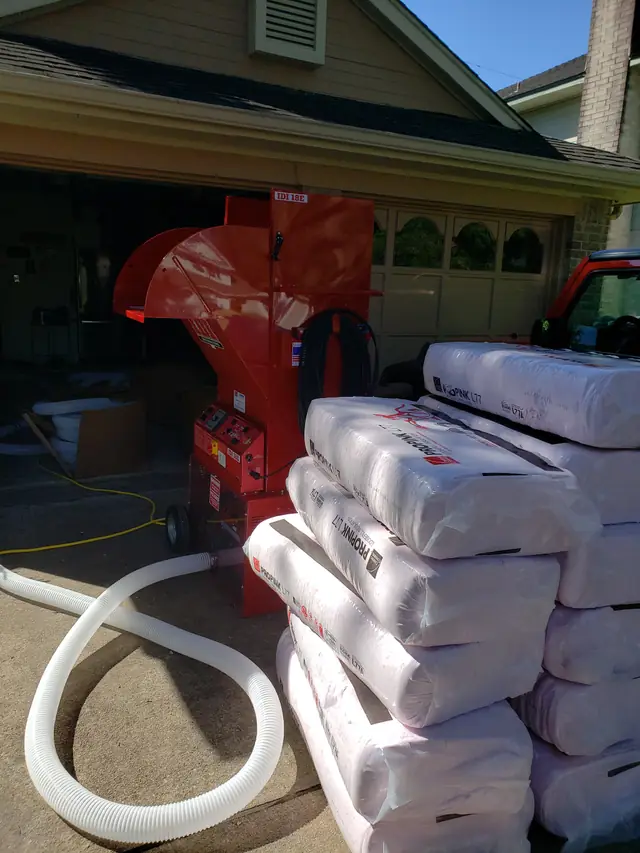
Most homeowners think of the air conditioner and the attic as two unrelated parts of the house. One cools you down, the other is just empty space with a water heater and some old boxes in it. In a Gulf-coast summer, that's not how it works. The attic is the single biggest source of heat gain in most Houston homes, and every degree that gets through it is a degree your AC has to remove all over again. Treating the two as separate problems is how a lot of homeowners end up replacing a perfectly good system when the real issue was sitting eighteen inches above their heads the whole time.
Why the attic matters so much here
Roofing materials absorb an enormous amount of solar heat over the course of a Texas afternoon, and that heat has to go somewhere. Without enough insulation between the attic and the living space, it moves straight down through the ceiling by conduction, and it keeps radiating for hours after the sun goes down, which is part of why houses in this area stay warm well into the evening even once the outdoor temperature has dropped. Insulation doesn't stop that heat from building up in the attic. What it does is slow down how much of it reaches the rooms below, which is exactly what your air conditioner needs to actually keep pace instead of running behind all day.
Loose-fill and why coverage matters more than the label
A lot of attics in older Houston-area homes were insulated once, at construction, and never touched again. Insulation settles and compresses over ten or fifteen years, and settled insulation performs nowhere near what it did on day one. Blown-in loose-fill, like the ProPink material our crew runs through an IDI blowing machine, is one of the more effective ways to bring an attic back up to a real working depth, because it fills around joists, wiring, and odd framing shapes instead of leaving gaps the way batts often do around obstructions. Coverage and depth across the whole attic floor matter more than any single number on a bag.
There's a reason this mistake is so common. An AC problem announces itself. The system runs constantly, the house feels warm, and the fix feels obvious: something's wrong with the equipment. An attic problem is quiet by comparison. Nobody climbs up there to check it, so it can sit underperforming for a decade without ever presenting itself as the actual cause of anything.
The part people usually get backwards
A common instinct is to fix the AC system first, since that's the thing making noise or running constantly, and treat insulation as a someday project. It usually goes the other way. If the attic is letting heat pour through, no AC upgrade will fully solve the comfort problem, because you'd be asking a better machine to fight the exact same heat load. Get the insulation right first, or at the same time, and the existing system often performs noticeably better without a single change to the equipment itself. That's also why we run our own insulation crew instead of subcontracting it out. Cooling and insulation are the same job here, not two separate quotes from two separate companies who never talk to each other.
Signs your attic is probably underperforming
- Upstairs rooms run noticeably hotter than downstairs, even with the AC running constantly
- The AC cycles on and off frequently in the afternoon without ever fully catching up
- You can feel warm air radiating off an upstairs ceiling late in the evening
- Insulation you can see from the attic hatch looks thin, patchy, or compressed flat in spots
- Energy bills climb sharply from spring into summer beyond what the temperature swing alone explains
None of these on their own proves it's the attic. But taken together, they're a strong signal that the ceiling between your living space and 130-degree attic air isn't doing enough work, and that's worth having someone actually look at rather than guessing.
What a real look at it involves
A proper check means someone getting into the attic with a flashlight and a tape measure, not eyeballing it from the hatch. Depth, coverage, and whether older insulation has shifted or compacted near the eaves all matter. Combine that with a look at duct runs passing through the same attic space, since a leaking duct in a 130-degree attic is losing cooled air into the worst possible place it could go. Blue Label Services checks both together on service calls across Cypress, Houston, Katy, Tomball, Spring, Magnolia, and the surrounding Northwest Houston corridor, because a homeowner shouldn't have to be the one connecting the dots between their attic and their electric bill.
It's also worth saying plainly that insulation isn't a one-time purchase that lasts the life of the house. Loose-fill settles a little every year, attic ventilation changes as roofs get resealed or vents get blocked, and a home that had good coverage in 2010 may not have it now. Treating an attic check as a periodic thing, the same way you'd think about a roof or a water heater, catches the slow decline before it shows up as a summer that suddenly feels worse than the one before it.
Blue Label Services, (832) 429-2209
Call (832) 429-2209More articles
Why the Upstairs Never Cools Off in a Two-Story Cypress Home
Heat rises, but that's only half of why the second floor runs hotter than the first all summer long.
Why 74 Degrees Can Still Feel Wrong in a Houston Summer
The thermostat measures one thing. Your skin is measuring something else entirely.