What Actually Happens During an AC Tune-Up (and Why Skipping It Costs More Than the Visit)
A maintenance visit is not just a filter swap - it is the only way to catch the problems that become $2,000 repairs in August.
August 27, 2026 · 3 min read
Most Cypress homeowners schedule an AC tune-up the same way they schedule a dentist appointment: when something already hurts. That approach works fine for teeth most of the time. It works badly for air conditioners in Northwest Houston, where a system that fails at noon on a 100-degree Thursday is not a nuisance - it is a health event.
The case for annual maintenance is not abstract. A tune-up catches the specific failures that, left alone, compound into expensive ones. Here is what a technician actually does during a visit, and what each step is designed to prevent.
The coil is the first thing that matters
Your system's evaporator coil - the indoor component that pulls heat out of your air - collects a thin layer of dust, pollen, and pet dander over time. Even a light coating cuts airflow significantly and reduces the coil's ability to transfer heat. A dirty coil works harder, runs longer, and pulls more electricity to produce the same result. If the buildup is severe enough, moisture that should drain away instead freezes onto the coil, blocking airflow entirely and eventually damaging the compressor downstream.
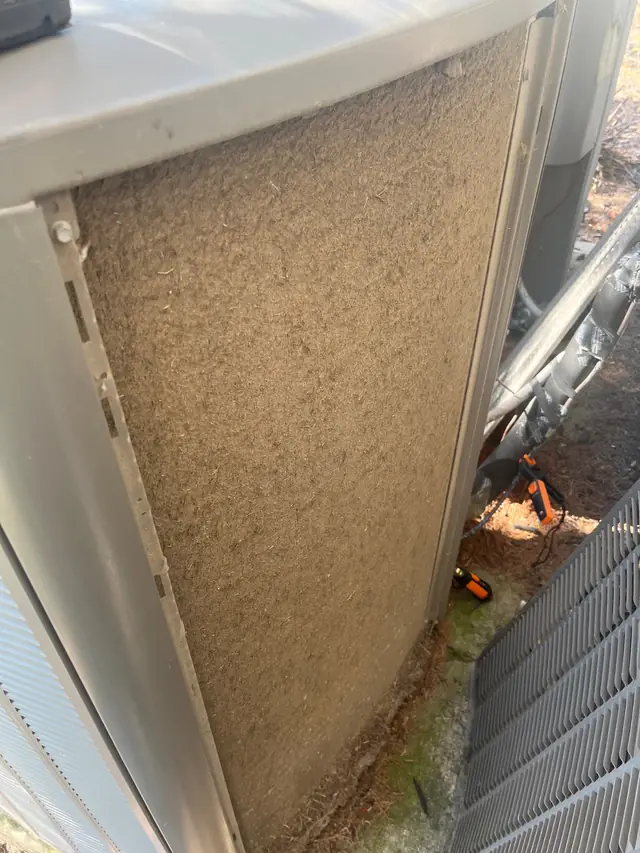
The outdoor condenser coil has its own version of this problem. Grass clippings, cottonwood seeds, and Houston's general airborne debris pack into the fins over a season. A technician rinses them out and checks that the fins themselves are straight. Bent fins reduce airflow across the coil and are easy to correct with the right comb tool - a detail that matters more on a 95-degree day than it sounds.
Refrigerant level and what it tells you
Refrigerant does not burn off like gasoline. If a system is low on charge, it has a leak somewhere. A tune-up includes checking system pressure to confirm refrigerant is where it should be. A system running low works harder than it should, ices up, and can overheat the compressor - the single most expensive component in the outdoor unit. Finding a small leak early costs a fraction of what it costs after the compressor fails.
Electrical checks that prevent the most dramatic failures
Contactors and capacitors are small parts, and they fail. A contactor is a relay that tells the outdoor unit to start; a capacitor gives the motors the jolt they need to get moving. Both degrade over time, and both can take out a compressor if they fail in the wrong way. A technician measures capacitor strength and checks contacts for signs of burning or pitting. Replacing a failing capacitor during a maintenance visit costs a small fraction of what a failed compressor costs to replace.
Drain line: the one check that keeps your ceiling dry
Your air handler collects condensation continuously when it runs. That water drains through a PVC line, which grows algae and sludge in the Texas heat. A clogged drain line backs up into the drain pan, overflows onto the air handler, and eventually drips through your ceiling. A technician flushes the line and verifies it is draining freely. It takes five minutes and costs nothing extra during a tune-up. Left unaddressed, it becomes a water damage claim.
What a 30-point inspection actually covers
Blue Label's Blue Diamond Club maintenance visits include more than 30 points of inspection. Beyond the items above, a technician checks thermostat calibration, measures temperature differential across the evaporator, tests blower motor amperage, inspects ductwork connections at the air handler, and verifies that safety switches are functioning. Each check is looking for the early version of a problem, not the late version.
The math on regular maintenance
The Blue Diamond Club One Diamond plan runs $159 per year and covers two maintenance visits. Blue Label backs every repair made during membership with a 5-year guarantee rather than the standard 3-year guarantee. For a system that runs nine months out of twelve in Cypress, two visits per year - once in spring before peak demand, once in fall before the heater runs - is the standard recommendation from every major equipment manufacturer, and it is the schedule that keeps warranties valid.
The underlying logic is simple: the visit costs less than one hour of emergency labor, and it is the only way to find problems while they are still small. Call Blue Label at (832) 429-2209 to schedule before the heat settles in.
Blue Label Services — (832) 429-2209
Call (832) 429-2209More articles
Repair or Replace Your AC? A Straight Answer for Northwest Houston Homeowners
Age, repair cost, and your system's refrigerant type are the three numbers that settle most repair-or-replace decisions before a tech arrives.
Indoor Air Quality in Cypress, TX: What Is Actually in the Air You Breathe at Home
Your HVAC system moves air through your home hundreds of times a day - what it does to that air along the way depends entirely on what equipment you have installed.