Repair or Replace Your AC? A Straight Answer for Northwest Houston Homeowners
Age, repair cost, and your system's refrigerant type are the three numbers that settle most repair-or-replace decisions before a tech arrives.
August 27, 2026 · 3 min read
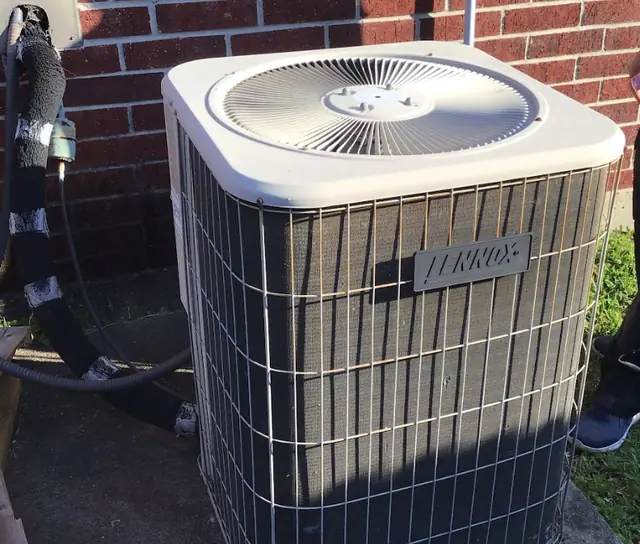
When your air conditioner stops working in August, the decision feels urgent and expensive at the same time. A technician tells you what the repair costs. You wonder whether you should just replace the whole thing. The sales pressure points one direction; the repair invoice points another. Here is how to think through it without anyone at the table with a financial interest in your answer.
Start with the age of the system
Residential central air conditioning systems are engineered to last 15 to 20 years. In Northwest Houston, where systems run hard from April through October and often into November, the lower end of that range is more realistic for equipment that has not been regularly maintained. A system under 10 years old with a single point of failure almost always makes sense to repair. A system over 15 years old that needs a major component is a much closer call.
The repair cost threshold
A practical rule: multiply the system's age in years by the cost of the repair. If the result exceeds $5,000, replacement typically pencils out better. A 12-year-old system needing a $300 capacitor repair passes that test easily - fix it. That same system needing a compressor replacement at $1,800 gives you $21,600 on the formula, well above the threshold, and the compressor alone represents the majority of what a new outdoor unit costs.
Refrigerant type changes the calculus
Systems manufactured before 2010 almost certainly use R-22 refrigerant, which has been phased out of production. If your system has a refrigerant leak and uses R-22, the repair cost is not just the technician's labor and the leak fix - it also includes sourcing refrigerant that is increasingly scarce and expensive. A leaking R-22 system that needs recharging is a strong signal to replace rather than repair, because you are spending money today that still leaves you with an aging system and the same leak risk.
Signs that lean toward replacement
- Two or more repairs in the past two years. Systems tend to fail in clusters once components start aging.
- The system cannot keep the house below 78 degrees on a 95-degree afternoon even when running continuously. A properly sized system should hold temperature.
- Electricity bills have increased noticeably year over year without a change in usage habits. Efficiency drops significantly as systems age.
- Unusual sounds - grinding, banging, or rattling - that are new. These often indicate bearing or motor failure that will worsen.
- The system uses R-22 refrigerant and has a confirmed leak.
Signs that lean toward repair
- The system is under 10 years old and has been regularly maintained.
- The failure is a single, identifiable component - capacitor, contactor, relay, or motor - rather than the compressor.
- The repair cost is well under $1,000 on a system under 12 years old.
- The system cools well when it runs - the issue is a specific failure, not general performance decline.
What Blue Label's guarantees mean for this decision
Blue Label backs every repair with a 3-year guarantee: if the same part fails within three years, they replace it at no charge. On a new system installation rated 15.2 SEER2 or above, the no-breakdown guarantee extends to 10 years. That asymmetry is worth factoring in. A repaired older system has a 3-year backstop on the specific part fixed; a new system has a decade-long backstop on the whole thing.
The honest answer is that neither repair nor replacement is universally right. The numbers above cover most cases. When they do not, the right next step is a diagnostic visit from a technician who can read the actual system data rather than estimate from outside. Blue Label offers free estimates on replacement systems and charges a $59 dispatch fee for service calls - call (832) 429-2209 to get a real number to work with.
Blue Label Services — (832) 429-2209
Call (832) 429-2209More articles
What Actually Happens During an AC Tune-Up (and Why Skipping It Costs More Than the Visit)
A maintenance visit is not just a filter swap - it is the only way to catch the problems that become $2,000 repairs in August.
Indoor Air Quality in Cypress, TX: What Is Actually in the Air You Breathe at Home
Your HVAC system moves air through your home hundreds of times a day - what it does to that air along the way depends entirely on what equipment you have installed.